Whales and the gulf
How to watch whales well
A good day with whales is one where the whales barely notice you. Here is what responsible watching looks like, from approach rules and seasickness to what to wear and what to expect.
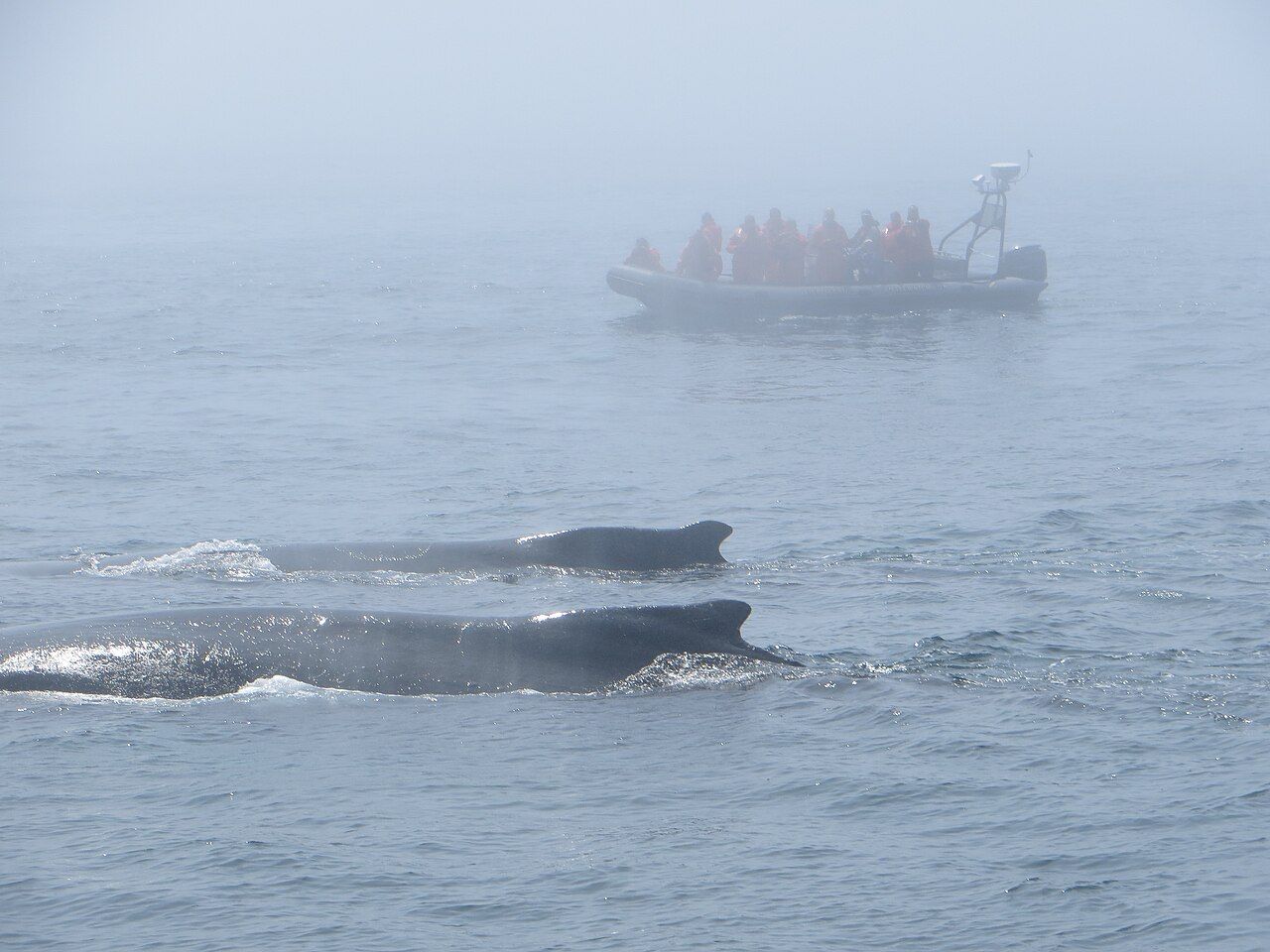 Photo by Mlouisebarbour; CC BY-SA 4.0 (source file)
- Getting there
- Harbours and lookouts all round the coast
- Bring
- Layers, waterproof shell, hat, gloves, seasickness remedy, binoculars
- At sea
- Even in July the gulf is cold and the wind on open water is sharp; swell can build quickly when the wind turns north-west.
- From Chéticamp
- Applies at every harbour and lookout
Whales off Cape Breton are wild animals going about the serious business of feeding, resting and raising young. Watching them is a privilege, and the best way to repay it is to make sure your presence costs them as little as possible. That applies whether you stand on a cliff, paddle a kayak or go out on a larger vessel.
Start on land
The gentlest way to watch whales is from shore, and Cape Breton is unusually good for it. The western cliffs of the Highlands fall into deep water, and pilot whales and minkes often pass close to land. From a lookout you disturb nothing, and you can watch for as long as you like. The guide to watching whales from the cliffs covers the best spots, and it is worth spending an evening on a headland before deciding whether you need to go out at all.
What good practice looks like on the water
If you do go out, the way a vessel behaves around whales matters more than its size or speed. Good practice has a few clear signs. The vessel slows well before it reaches the area where whales are, approaches from the side and slightly behind rather than head on, and never drives straight at an animal or into the path of a group. It does not chase, split a pod, or come between a mother and calf. It keeps to the required distance, and if whales approach on their own, it stops or idles in neutral and lets them pass.
Good crews also limit the time spent with any one group and leave quietly. They talk about the animals, explain the rules, and do not promise particular sightings. A clear, confident answer that mentions the rules is a good sign.
If you paddle, the same principles apply, with extra caution. Stay close to shore, keep together as a group so whales can see where you are, and do not paddle towards whales. A kayak is quiet, which means whales may not know you are there until they surface beside you.
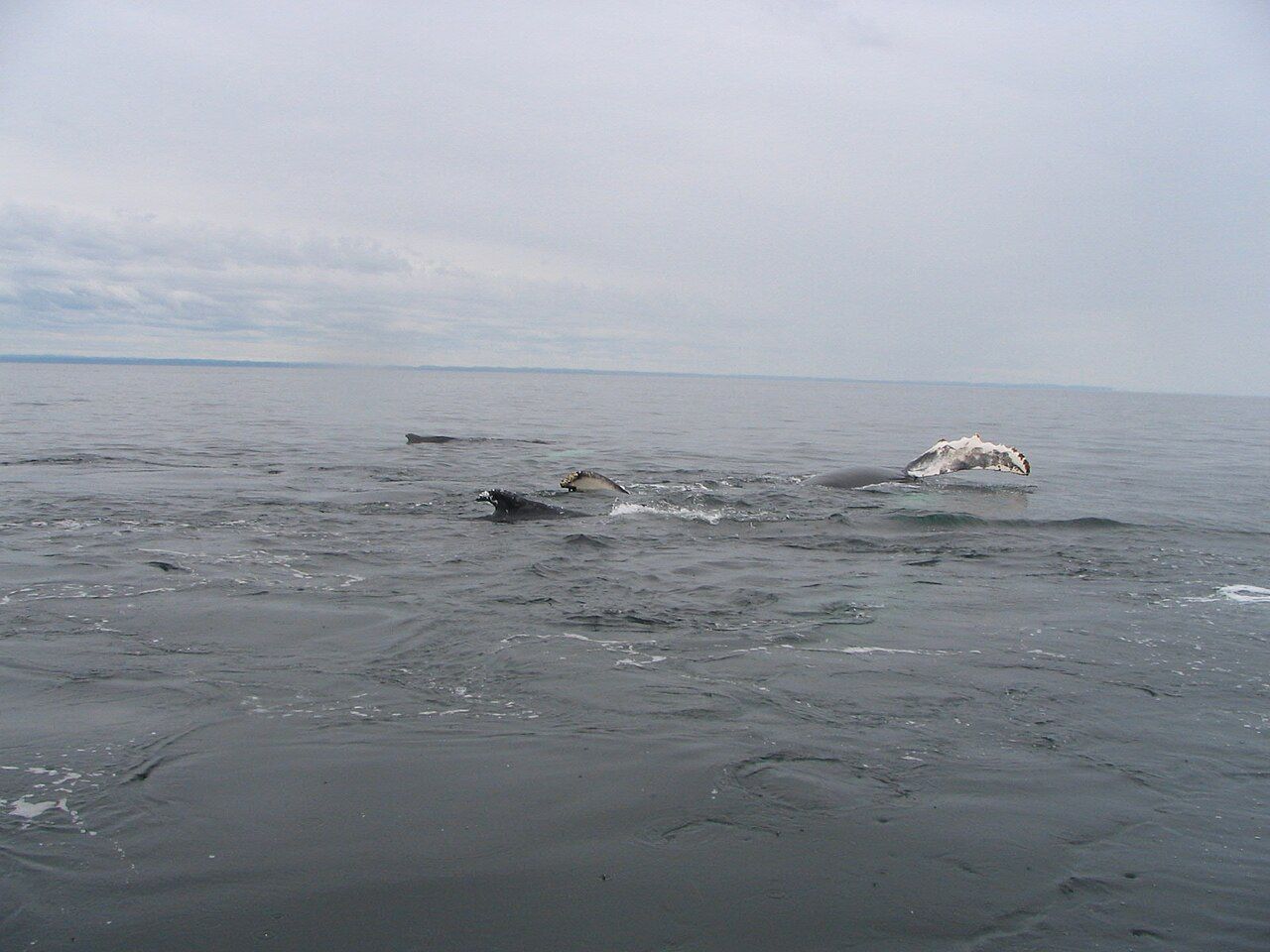 Photo by Nichole Ouellette/ouellette001.com; CC BY 4.0 (source file)
Canada's rules in general
Canada's marine mammal regulations make it an offence to disturb a whale, dolphin or porpoise. They set minimum approach distances for vessels, generally at least 100 metres from whales, with larger distances for some species and in some areas. They also cover feeding, touching and swimming with marine mammals, which are not allowed. In the Gulf of St. Lawrence, extra measures protect the North Atlantic right whale, including speed restrictions and closures in parts of the gulf.
Further along the coast: The pilot whales of the gulf
The rules apply to everyone on the water, including kayakers, paddleboarders and recreational boaters, not only commercial vessels. They are reviewed from time to time, and details can change between seasons. If you see a whale that is entangled, injured, stranded or dead, report it to Fisheries and Oceans Canada and do not try to help it yourself.
Seasickness and staying warm
The Gulf of St. Lawrence can be lively even on a bright day, and swell often lingers after wind has dropped. If you are prone to seasickness, take a remedy before you go out, as most work best taken in advance; ask a pharmacist which suits you. On board, stay in the fresh air, keep your eyes on the horizon, and stand or sit near the middle and towards the back of the vessel, where the motion is usually gentlest. Avoid reading or looking at a phone screen for long spells, and eat something light beforehand rather than going out on an empty stomach.
Dress for cold, even in July. Air over the water can feel much cooler than on land, and spray makes it worse. Wear layers, a waterproof and windproof outer shell, a warm hat and light gloves. Sunglasses help with glare, and sunscreen is still needed. Soft-soled shoes with good grip are safer on a wet deck.
What not to expect
Whales are not on a timetable. Some days bring pods of pilot whales around every headland; others bring fog, chop and long empty stretches. Breaching humpbacks make the photographs, but most whale encounters are quieter: a blow, a curved back, a fin, and then a long wait. Be wary of any promise of guaranteed sightings or close encounters.
Photographs rarely look like the brochures either. Whales surface briefly and unpredictably, and a phone camera will show small dark shapes. Many people enjoy the day more once they put the camera down and simply watch. Learning a little about the species first, from minke and fin whales to pilot whales, makes even a brief sighting more rewarding.
Leave no trace on the water
Take everything you bring home with you. Plastic and fishing line are a hazard to whales, seals and seabirds, and wind carries loose items overboard quickly. Keep noise low near animals. If you fly a drone, check the rules first, as there are limits on flying near marine mammals and in national parks.
Finally, share what you see in a way that helps. Clear photographs of humpback flukes can be useful to research, and sightings of rare species are worth reporting. Whale watching done well leaves the whales exactly as they were, and leaves you with a little more understanding of the sea around Cape Breton.
Back along the coast: Cape Breton Highlands · Further on: Chéticamp · Same stretch: Gulf of St. Lawrence, Gulf of St. Lawrence, Pleasant Bay, Gulf of St. Lawrence, Cape Breton Highlands · the whole coast · logbook