Along the Cabot Trail
Chéticamp, the Acadian harbour
Chéticamp is the largest Acadian community on Cape Breton, a fishing village strung along a sheltered harbour under the Highlands, with a tall stone church, a strong rug-hooking tradition and its own French.
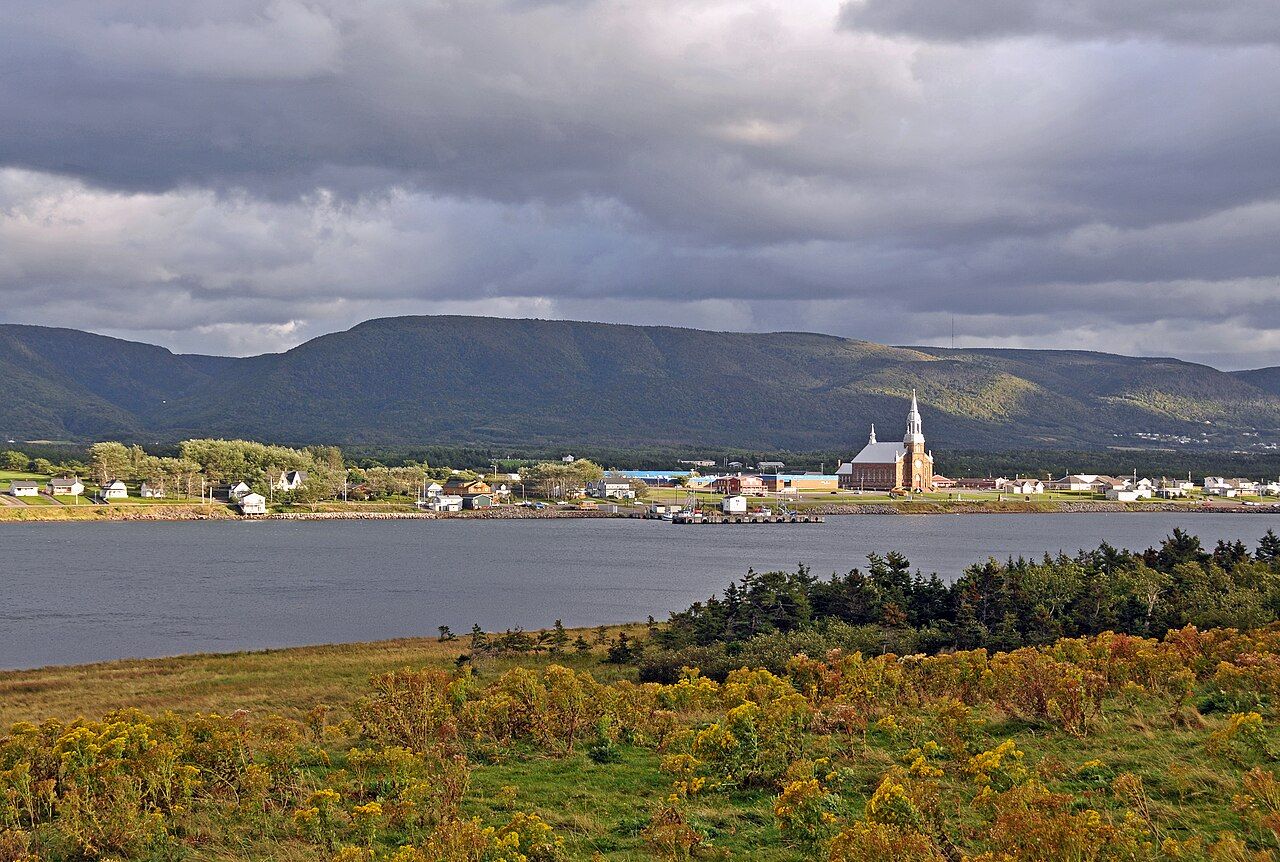 Photo by Dennis G. Jarvis; CC BY-SA 2.0 (source file)
- Getting there
- Cabot Trail, west coast, north of Margaree
- Bring
- Walking shoes, a windproof layer, some French phrases
- At sea
- The harbour is sheltered by Chéticamp Island; outside it, south-east winds rushing off the Highlands can gust hard along this coast.
- From Chéticamp
- Right here, at the park's western gate
Coming north along the Cabot Trail from Margaree, the road runs along open shore, past farms and small Acadian communities, and then the spire of a large stone church rises ahead. That is Chéticamp. The village stretches for several kilometres along a harbour, with the long green line of Chéticamp Island on the sea side and the steep slopes of the Highlands rising behind. It is a working fishing village, a centre of Acadian culture, and the western gateway to Cape Breton Highlands National Park.
An Acadian village
The Acadians are descendants of French settlers who came to what is now Nova Scotia and New Brunswick from the seventeenth century. In 1755 the British authorities began deporting them from their farms around the Bay of Fundy, an expulsion that went on for years and scattered families across the American colonies, France and elsewhere. Thousands died. Acadians call it the Grand Dérangement.
Chéticamp was settled after the expulsion, in the late eighteenth century, by Acadian families who came to fish and farm on this coast. Their descendants still make up most of the community. French is the everyday language for many residents, and the Chéticamp accent and vocabulary have their own character, shaped by long isolation. You will hear French in shops and at the harbour, and signs are often bilingual. A few words of French are welcomed, though English is widely spoken.
The Acadian flag, the French tricolour with a gold star in the blue band, flies all over the village. You will see it on houses, on fishing boats, and even on the shore of Chéticamp Island. The deeper history of the culture is covered in Acadian life on the west coast.
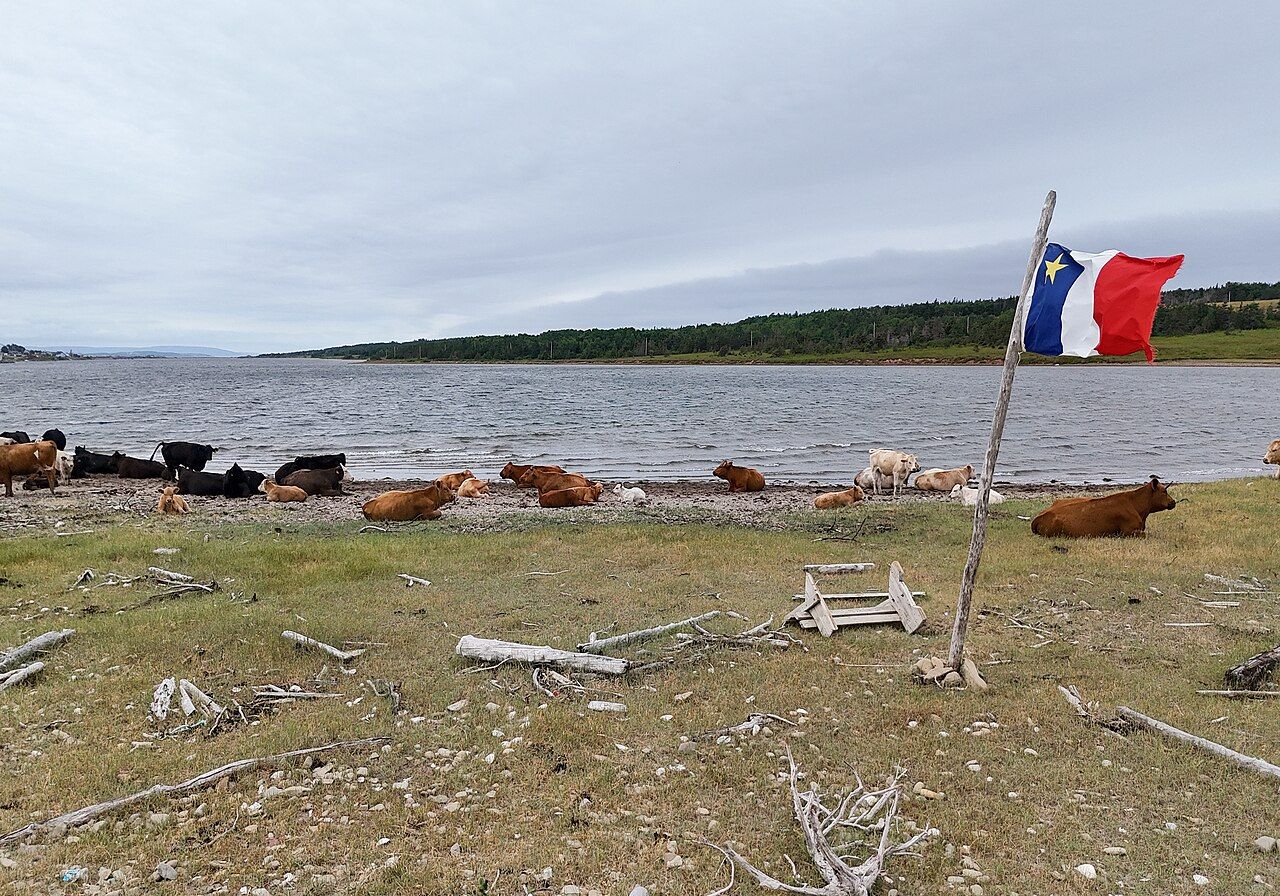 Photo by Quintin Soloviev; CC BY 4.0 (source file)
The church of Saint-Pierre
The church of Saint-Pierre dominates the village. Built of stone in the 1890s, it is a large Catholic church with a tall silver spire that is visible from far out at sea and from high on the Highlands. Much of the stone was brought over from Chéticamp Island, and building it was a huge effort for a community of fishers and farmers.
Inside, the church is bright and richly decorated, with painted and gilded detail, a curved ceiling and fine woodwork. It is still a parish church, so visit quietly, dress respectfully, and avoid service times unless you are there to worship. Opening hours vary, especially outside summer. Concerts are sometimes held in the church in summer.
From the water, or from Chéticamp Island across the harbour, the church shows how the village is laid out: a long line of houses and wharves along the shore, the spire at the centre, and the green wall of the Highlands rising steeply behind. It is the view most people carry away, and it is best in the late afternoon, when the sun from the west lights up the stone and the hills.
Hooked rugs
Chéticamp is known across Canada for hooked rugs. The technique pulls loops of wool through a backing cloth with a small hook to build up a dense, soft surface. It began as a household craft, making floor rugs from scraps, and in the twentieth century grew into a cottage industry, with women in Chéticamp producing finely worked rugs for sale far beyond the island. Designs range from flowers and geometric borders to scenes of village life, landscapes and portraits.
Les Trois Pignons, the village's cultural centre and museum, holds a large collection of hooked rugs alongside displays on local history and Acadian life. It is the best place to see the craft at its most ambitious. Rugs are still made locally, and you may see them for sale in the village.
Further along the coast: The Margaree valley and its salmon river
The harbour and Chéticamp Island
The harbour is the heart of the village. Fishing boats tie up along the wharves, and the season's catches, with lobster and snow crab among the most important, shape the rhythm of the working year. A boardwalk runs along part of the waterfront, and an evening walk there, with the light dropping behind Chéticamp Island, is one of the simple pleasures of a stay. In summer you may see whales, or at least seabirds and seals, beyond the harbour mouth.
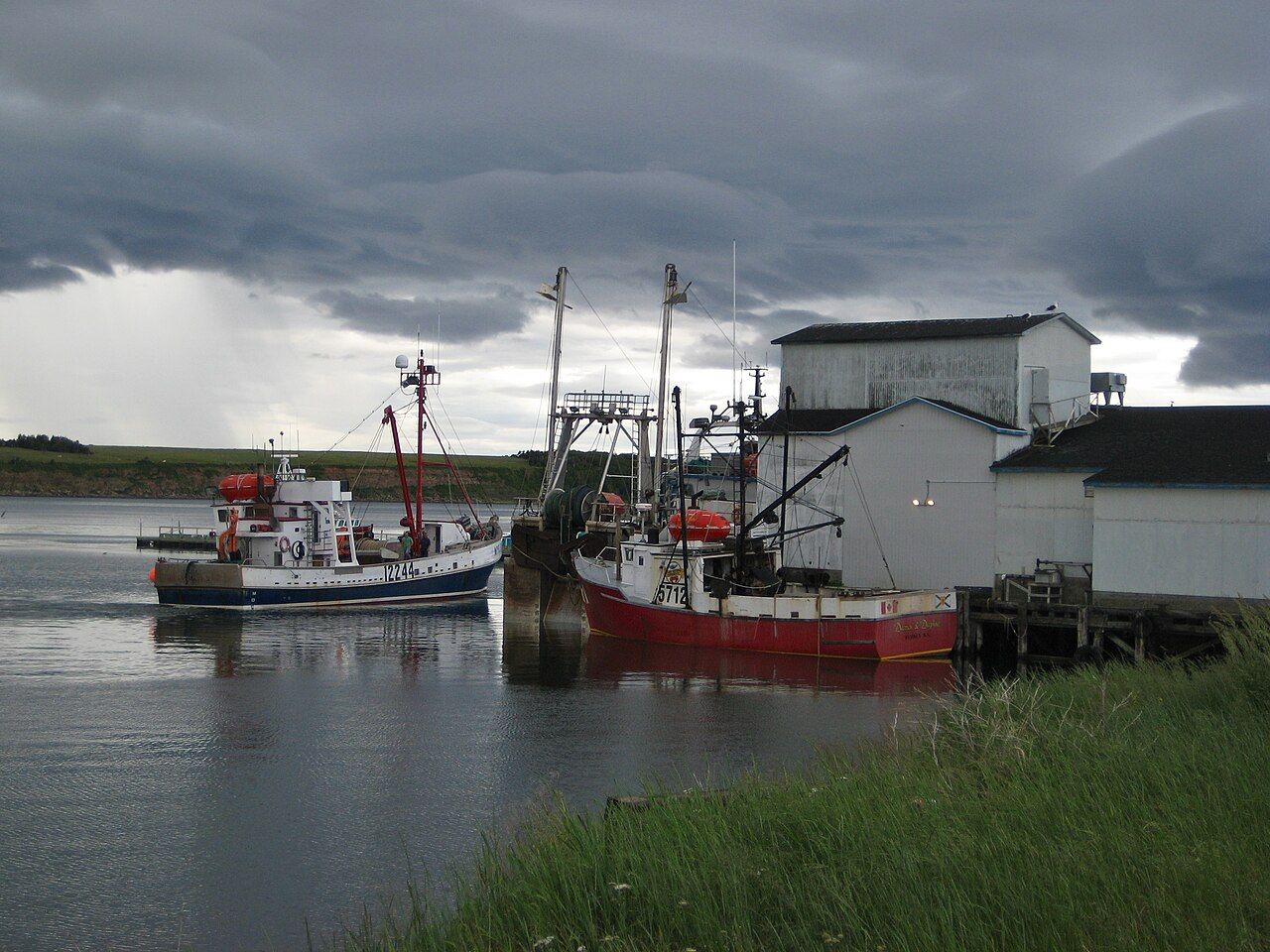 Photo by Ericbodden; CC BY-SA 3.0 (source file)
Chéticamp Island shelters the harbour from the open gulf. It is connected to the mainland by road and is mostly open pasture, grazed by cattle that wander freely, so drive slowly and watch for animals on the road and beach. The island has a lighthouse, wide views back to the village and the Highlands, and a quiet shore to walk along. It feels a long way from the busy Cabot Trail, even though it sits just across the water.
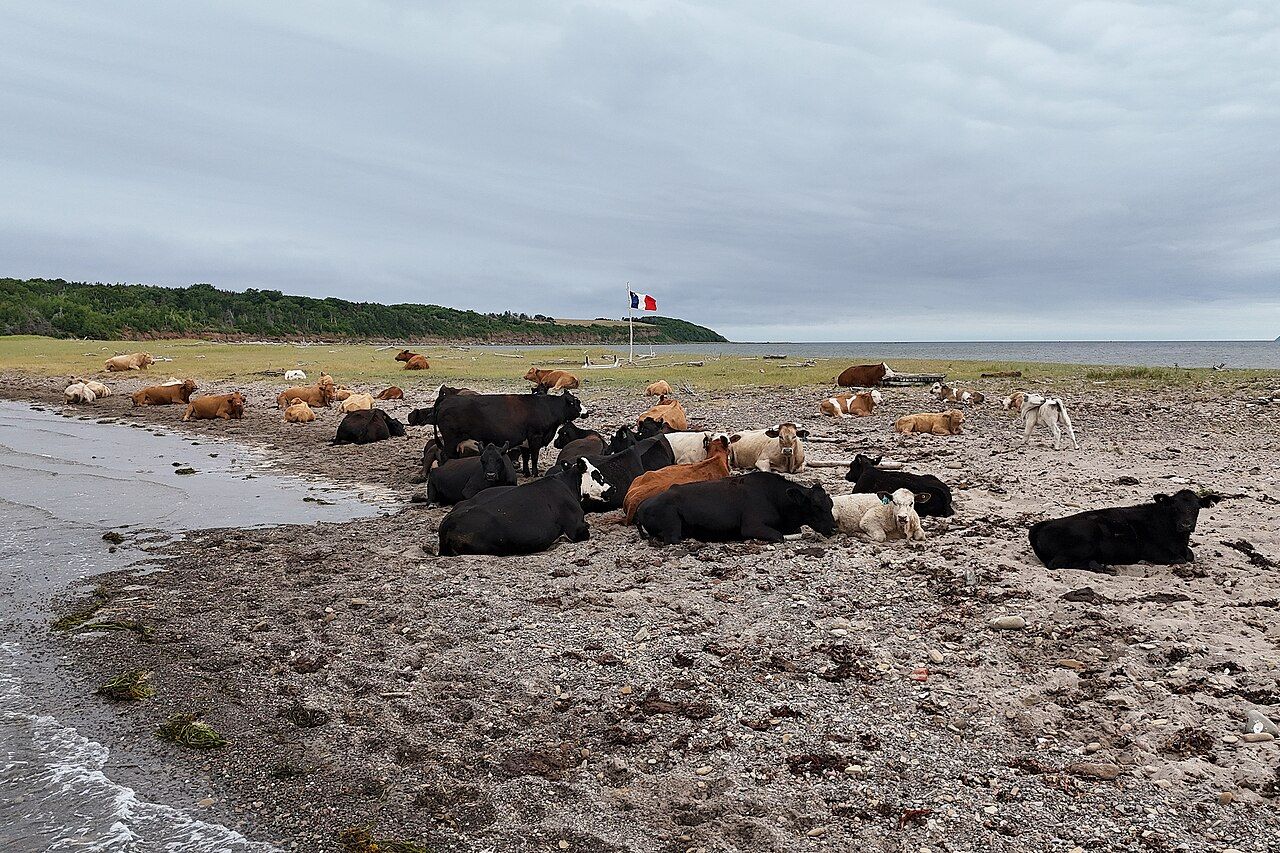 Photo by Quintin Soloviev; CC BY 4.0 (source file)
It feels a long way from the busy Cabot Trail, even though it sits just across the water.
Gateway to the Highlands
A few kilometres north of the village, the Chéticamp River comes down out of the hills and the Cabot Trail enters Cape Breton Highlands National Park. There is a visitor centre near the entrance with information on trails, conditions and wildlife, and the place to buy a park pass. Just inside the park, the river valley offers walks to salmon pools, and the steep Acadian Trail climbs to views over the coast.
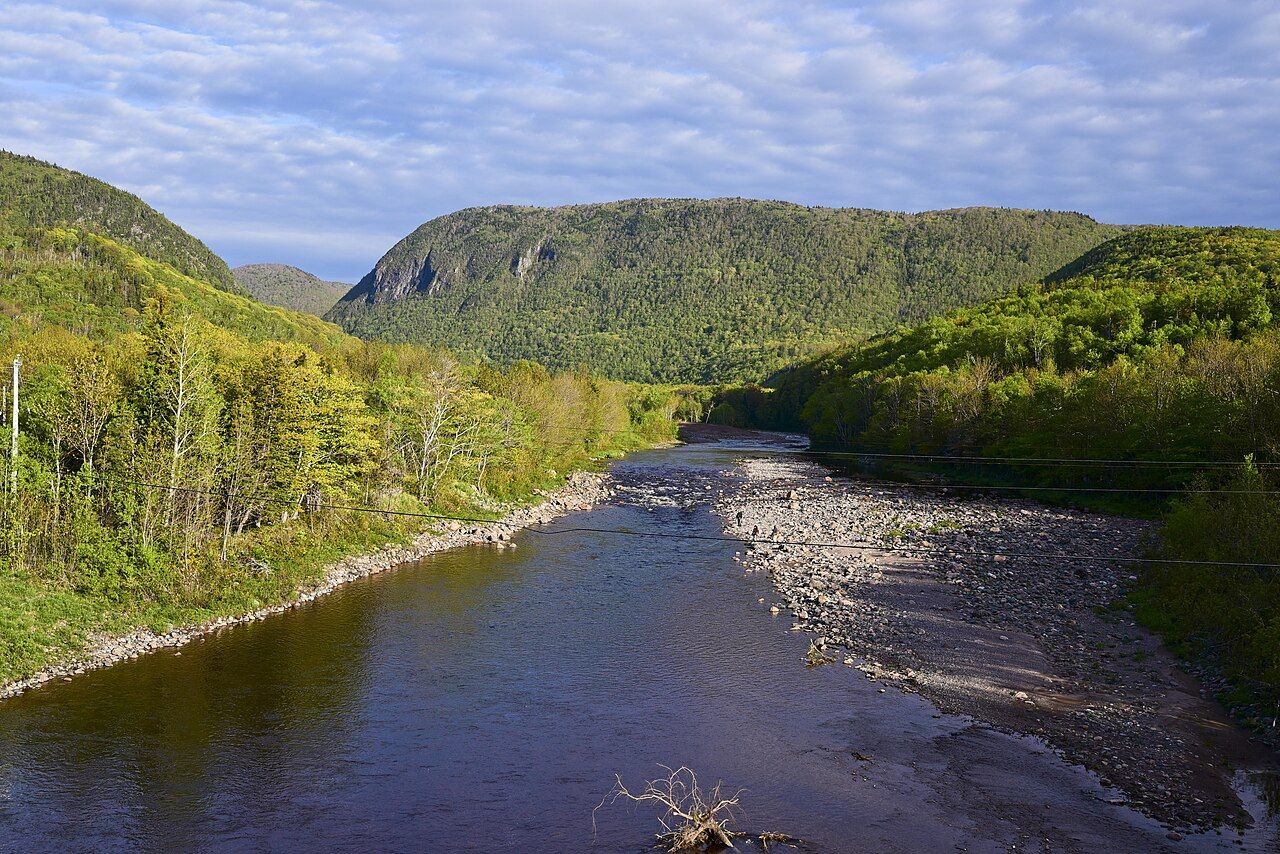 Photo by Mykola Swarnyk; CC BY-SA 4.0 (source file)
North of the entrance, the road follows the sea past Cap Rouge and other lookouts before climbing French Mountain to the plateau and the Skyline Trail. This stretch is one of the finest on the whole route, and one of the best places on the island to look for pilot whales from land. Chéticamp is a natural base for exploring it, as well as for planning the full loop; see driving the Cabot Trail for direction and pace.
Chéticamp has groceries, fuel, a pharmacy and a range of places to stay and eat, which makes it one of the main service centres on the western side of the trail. North of the village, services are sparse until Pleasant Bay, so fill the tank and pick up supplies here. In high summer the village is busy and rooms fill early; outside July and August it is quieter, and some seasonal businesses close from mid-October.
The Acadian calendar brings a few events worth knowing about. Summer festivals celebrate Acadian music and culture, and in late winter the area keeps up the Mi-Carême, a mid-Lent tradition of masked and costumed visiting between houses. Dates vary each year. Music is never far away: Acadian fiddle and song turn up at community events through the summer.
Weather here can change fast. The village sits under the steep edge of the Highlands, and strong south-easterly winds sometimes rush down the slopes, gusting hard along the coast. If the forecast warns of high winds, take care on the road, especially with a camper or trailer, and with car doors in exposed car parks.
Back along the coast: Anywhere · Further on: Margaree · Same stretch: Margaree, Meat Cove, Ingonish, Cabot Trail · the whole coast · logbook