Bras d'Or and the south
The Bras d'Or, an inland sea
Salt water fills the middle of Cape Breton. The Bras d'Or is calm, sheltered and full of eagles, with quiet roads running along its many arms and bays.
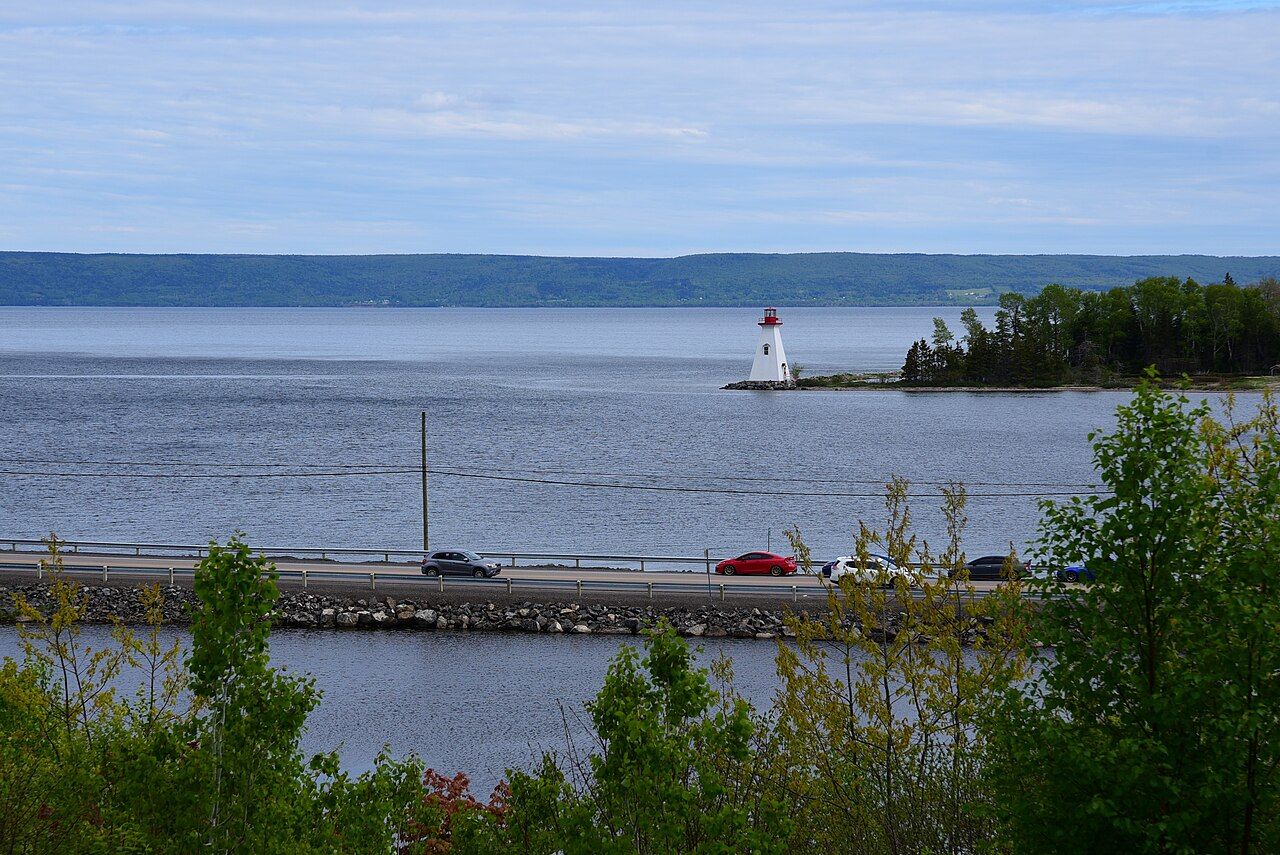 Photo by Mykola Swarnyk; CC BY-SA 3.0 (source file)
- Getting there
- Trans-Canada Highway to Baddeck
- Bring
- Binoculars, camera, a picnic, sun hat
- At sea
- The lake is sheltered, with small tides and gentle swells, but summer afternoon breezes can raise a chop across the wider basins.
- From Chéticamp
- About 90 minutes to Baddeck
Look at a map of Cape Breton and the middle of the island is mostly water. The Bras d'Or Lake is not a lake in the usual sense but an inland sea: a large body of salt water joined to the Atlantic by narrow channels, with long arms, bays and islands reaching far into the land. It shapes the island's geography, its history and its pace. The Cabot Trail draws the crowds, but the roads around the Bras d'Or are some of the quietest and most rewarding drives in Nova Scotia.
An inland sea
The Bras d'Or connects to the ocean in the north through the Great Bras d'Or channel and the smaller Little Bras d'Or, and in the south through the St. Peter's Canal, a short canal with a lock built in the nineteenth century to link the lake with St. Peter's Bay. Because so much fresh water drains into it from rivers and streams, and because the ocean exchange is limited, the lake is less salty than the open sea. Its tides are small compared with the Atlantic coast.
The result is an unusual estuary, with a mix of marine and freshwater life and many sheltered coves. The water is generally calmer and in summer warmer than the open coasts, which makes it popular for sailing, kayaking and swimming. The lake's arms and basins have their own names, including the Great Bras d'Or, St. Andrews Channel, East Bay, West Bay and St. Patrick's Channel.
A biosphere reserve
In 2011 the Bras d'Or Lake and its watershed were designated a UNESCO biosphere reserve. The designation does not create a park or new restrictions. It recognises a region where people work to balance conservation with the way communities live, fish and farm, and it supports research, education and cooperation among governments, Mi'kmaw communities and local groups.
The lake has faced real challenges, including disease that hit its oyster populations, changes in water quality and pressure from development along the shore. Efforts to understand and protect it continue. For a visitor, the reserve is a reminder that the quiet shoreline is a working, inhabited landscape. The Mi'kmaq have lived around these waters for thousands of years, and the lake sits at the heart of Unama'ki, the Mi'kmaw homeland.
Bald eagles
The Bras d'Or is one of the best places in eastern Canada to see bald eagles. They nest in tall trees along the shore and around the islands, and you often see adults perched on dead branches above the water or soaring over the bays. Young eagles, which take several years to gain the white head and tail, are mottled brown and easy to mistake for other birds of prey.
Eagles can be seen year-round, but they are especially noticeable in late winter and spring, and again in summer when young birds are learning to fly. Scan the tree lines along the water and watch for large dark birds with broad, flat wings. Keep your distance from nests, which are often used year after year; disturbing nesting eagles is harmful and, in many cases, illegal. Ospreys, cormorants, herons and many waterbirds also live on the lake.
Further along the coast: Gaelic Cape Breton and the fiddle
Baddeck and the Bell museum
Baddeck, on the north shore of the lake, is the main village of the Bras d'Or and the traditional starting point for the Cabot Trail. It has a waterfront, a wharf, a small island lighthouse offshore and a busy summer season. The lake views, the sailing and the quiet evenings by the water make it a natural base.
The village is best known for Alexander Graham Bell, the inventor associated with the telephone, who spent much of his later life at a summer estate on a headland across the bay. Bell conducted many experiments here, with kites, aircraft and hydrofoil boats. In 1909 the Silver Dart, an aircraft built by a group Bell led, made the first powered, controlled flight in Canada from the frozen surface of Baddeck Bay. In later years his team built hydrofoil boats that set a world water speed record on the lake.
The Alexander Graham Bell National Historic Site in Baddeck tells this story through exhibits, models and replicas, including the hydrofoils and the Silver Dart. It is run by Parks Canada, and hours and programmes vary by season. The estate itself remains private and is not open to visitors.
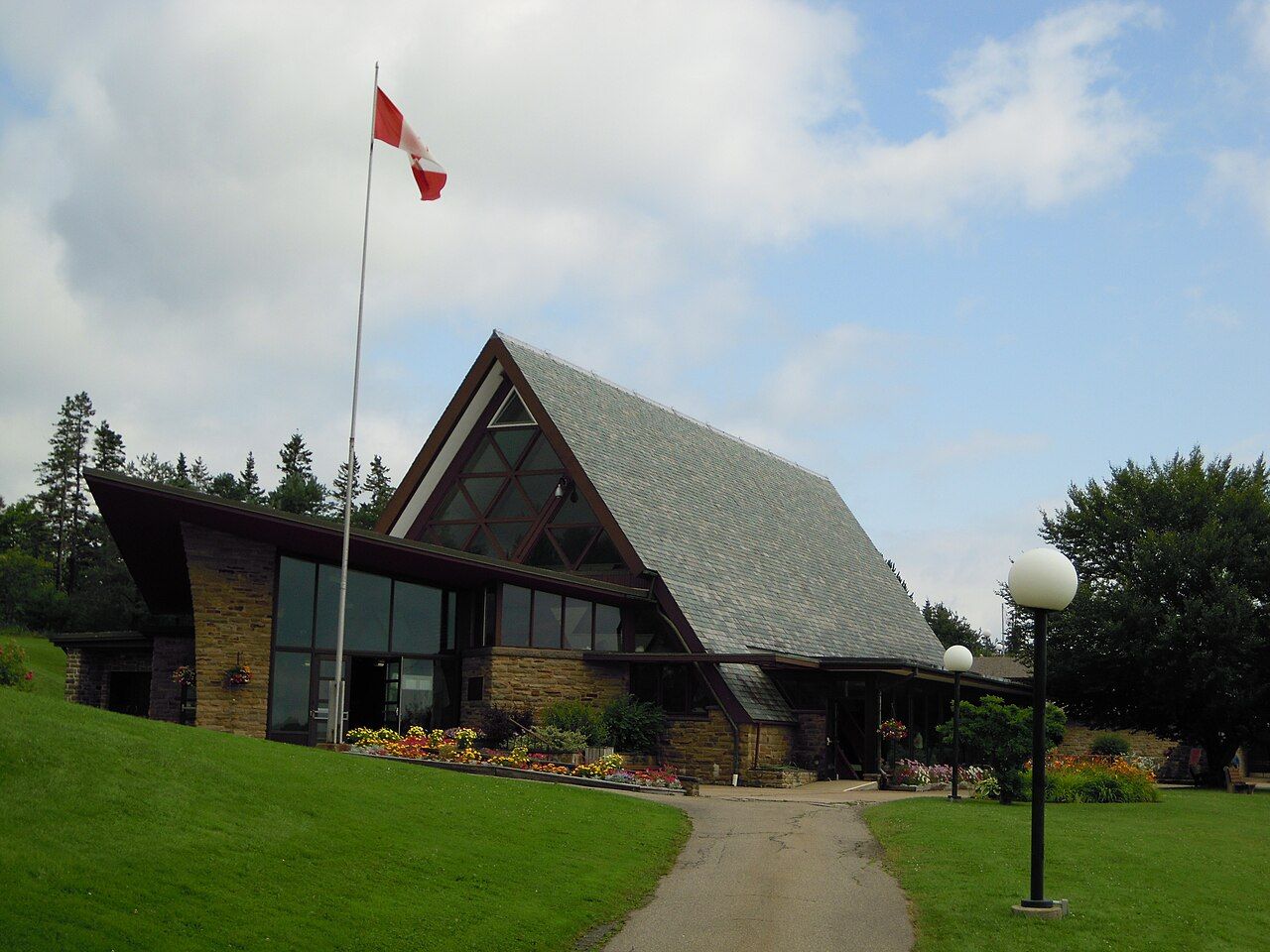 Photo by Skeezix1000; CC BY-SA 3.0 (source file)
Driving around the lake
The roads around the Bras d'Or are slower than the main highways and much quieter. A few ideas for routes:
- The north shore from Baddeck east toward the Seal Island Bridge, with views over the Great Bras d'Or.
- The southern shore through the lake communities toward St. Peter's and its canal.
- Across the Barra Strait to Iona, where the Highland Village Museum looks over the water.
- The east side, along East Bay, toward Sydney and the road to Louisbourg.
Some routes involve small ferries or bridges, and conditions and schedules change. Services can be thin on the quieter roads, so fill up with fuel in the larger villages.
When to go
Summer is the warmest and busiest time, with the best swimming and sailing and the full range of museums and events. Late September and early October bring autumn colours to the hardwood hills around the lake, cooler air and fewer people. In winter the lake can partly freeze, and the shores are very quiet.
The Bras d'Or fits naturally with the Gaelic heritage of Iona and the settlements around the lake, with a trip to the Fortress of Louisbourg further east, and with the Cabot Trail, which begins and ends near Baddeck.
Back along the coast: Louisbourg · Further on: Port Hood · Same stretch: Louisbourg, Port Hood · the whole coast · logbook