Acadian, Gaelic and Mi'kmaw
Unama'ki: the Mi'kmaw homeland
Long before the island had a French or English name, it was Unama'ki to the Mi'kmaq. Their communities are part of its present, and visitors are welcome when they come with respect.
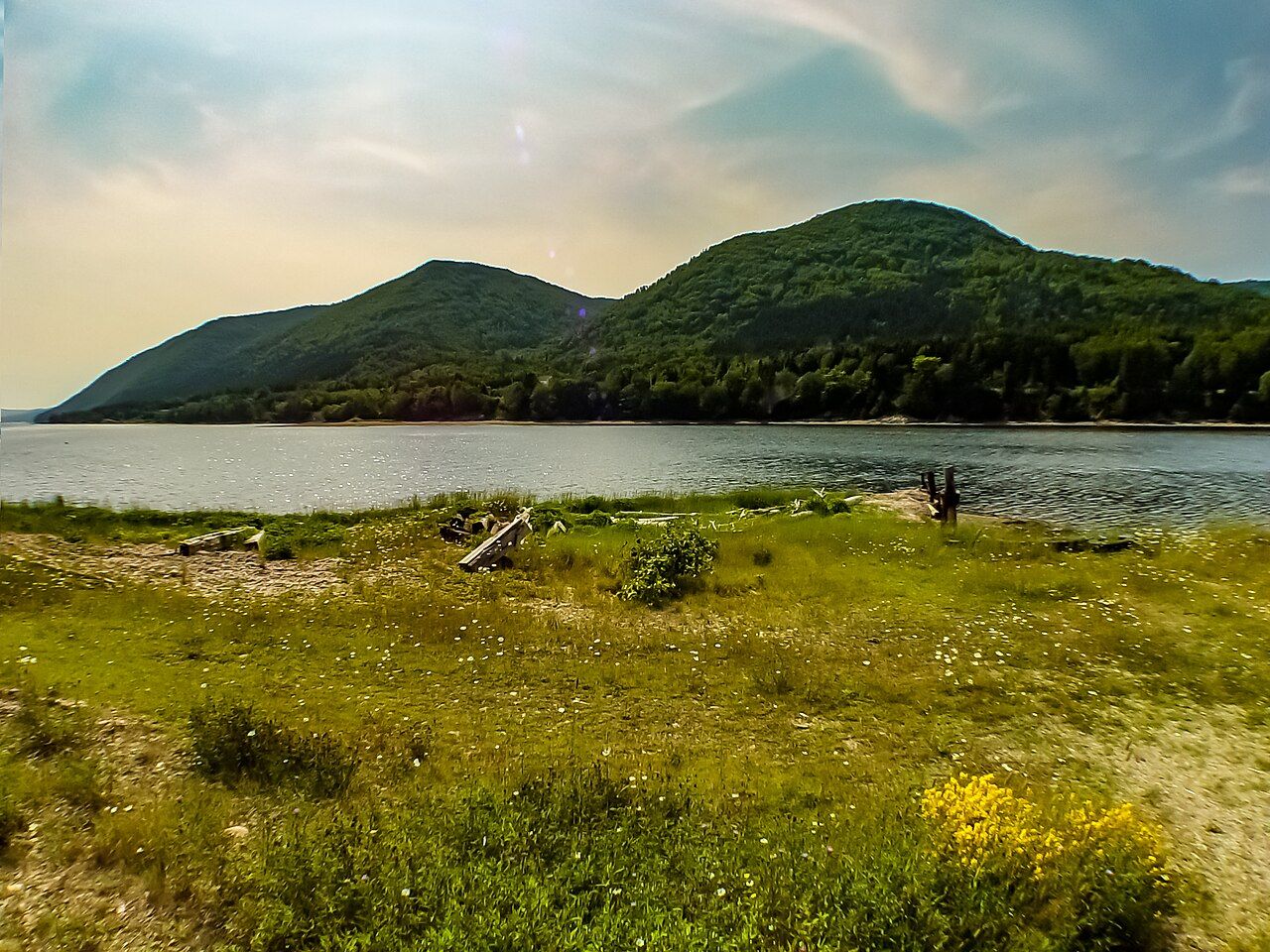 Photo by Michel Rathwell from Cornwall, Canada; CC BY 2.0 (source file)
- Getting there
- Communities around the Bras d'Or and Sydney
- Bring
- Respect, patience, questions asked politely
- At sea
- The Bras d'Or waters are calmer than the open coast, and fog is common, fitting the island's Mi'kmaw name.
- From Chéticamp
- About two hours to the Bras d'Or
Cape Breton has had many names. The French called it Île Royale, the British gave it the name it carries on most maps, and the Gaelic settlers had their own words for it. For the Mi'kmaq, whose ancestors have lived here for thousands of years, it is Unama'ki, a name often translated as the land of fog. It is one of the districts of Mi'kma'ki, the wider Mi'kmaw homeland that covers what is now the Maritime provinces and parts of Quebec and beyond.
A homeland, not a footnote
The Mi'kmaq lived across Mi'kma'ki for millennia before European contact, moving with the seasons between coast and interior to fish, hunt and gather. The Bras d'Or, with its sheltered waters, rich fishery and many coves, was at the centre of life in Unama'ki. Place names across the island, many of them now spelled in English or French, come from Mi'kmaw words.
Unama'ki also holds a special place in Mi'kmaw governance. The Grand Council, the traditional governing body of the Mi'kmaw Nation, has long gathered at Mniku, an island in the Bras d'Or, where an annual mission and gathering continue. This is a living tradition, not a historical site to tour, and visitors should approach it in that spirit.
Treaties and hard history
The Mi'kmaq were among the first Indigenous peoples in North America to have sustained contact with Europeans, and they formed a close alliance with the French, including through the Catholic Church. As British power grew in the eighteenth century, the Mi'kmaq signed a series of Peace and Friendship Treaties with the British Crown. These treaties did not surrender land. They are still recognised in Canadian law, and they underpin Mi'kmaw rights to hunt, fish and gather today. Treaty Day is marked each year on 1 October.
The centuries after the treaties brought severe hardship: loss of land, disease, poverty, and policies aimed at erasing Mi'kmaw identity. In the twentieth century, many Mi'kmaw children from Cape Breton were sent to the residential school at Shubenacadie on the mainland, where they were cut off from their families and language. In the 1940s, a federal policy known as centralization tried to move Mi'kmaw families from their communities to a few larger reserves, causing great disruption. Survivors and their families continue to live with these effects, and this history deserves to be heard plainly.
Communities today
There are five Mi'kmaw First Nations in Unama'ki. Eskasoni, on the shore of the Bras d'Or, is the largest Mi'kmaw community anywhere, and Mi'kmaw is spoken widely there in daily life. Membertou, within the city of Sydney, is named after a seventeenth-century Mi'kmaw grand chief. The other three communities lie around the shores of the Bras d'Or.
These are home communities, with schools, churches, health centres, businesses and offices. They are not open-air museums. Driving through on a public road is fine, but treat it as you would any neighbourhood: drive slowly, do not photograph people or homes without asking, and do not wander onto private land.
Further along the coast: The Bras d'Or, an inland sea
Language, stories and craft
The Mi'kmaw language is one of the strongest Indigenous languages in eastern Canada, and Unama'ki is one of its heartlands. Community schools teach in and through Mi'kmaw, and there is a growing body of books, recordings and teaching materials. Mi'kmaw words have also entered regional English and French.
Stories of Kluskap, the cultural hero who shaped the land, are tied to places across Mi'kma'ki, including sites in Cape Breton such as a cave on Cape Dauphin. Respect these places as sacred, and keep to what is publicly shared.
Traditional arts include porcupine quillwork on birchbark, basketry made from ash splints and sweetgrass, beadwork and drum-making. The principle of netukulimk, roughly the idea of taking only what is needed so that the land can provide for future generations, guides much Mi'kmaw thinking about the environment and has shaped partnerships in places like the Highlands park.
The best way to learn is through places the communities have created for visitors. Several Mi'kmaw communities on the island run cultural or heritage centres, with exhibits, guided interpretation, crafts and sometimes food. Opening seasons and hours vary, and some open only in summer.
A few points help any visit:
- Ask before taking photographs of people, ceremonies or sacred objects, and accept a no.
- At a powwow or mawio'mi, follow the announcer's guidance about when to stand, when photos are allowed and when to stay off the dance arena.
- Buy crafts directly from Mi'kmaw artists and community outlets where possible.
- Use the names the communities use, including Unama'ki and Mi'kmaq, Mi'kmaw as the adjective.
- Listen more than you speak, and accept that some knowledge is not for outsiders.
Summer and early autumn bring powwows and gatherings in some communities, and many welcome visitors. Dates change from year to year and are announced locally. October is Mi'kmaq History Month in Nova Scotia, a good time to find talks, exhibitions and events.
Seeing the island differently
Learning even a little about Unama'ki changes the way you see Cape Breton. The Bras d'Or becomes the centre of a world rather than a scenic drive, the treaties explain the fishing boats you see on the water, and the French fortress at Louisbourg becomes one chapter in a much longer story. The Acadian and Gaelic histories told in Acadian life on the west coast and Gaelic Cape Breton sit on land that was Mi'kmaw first.
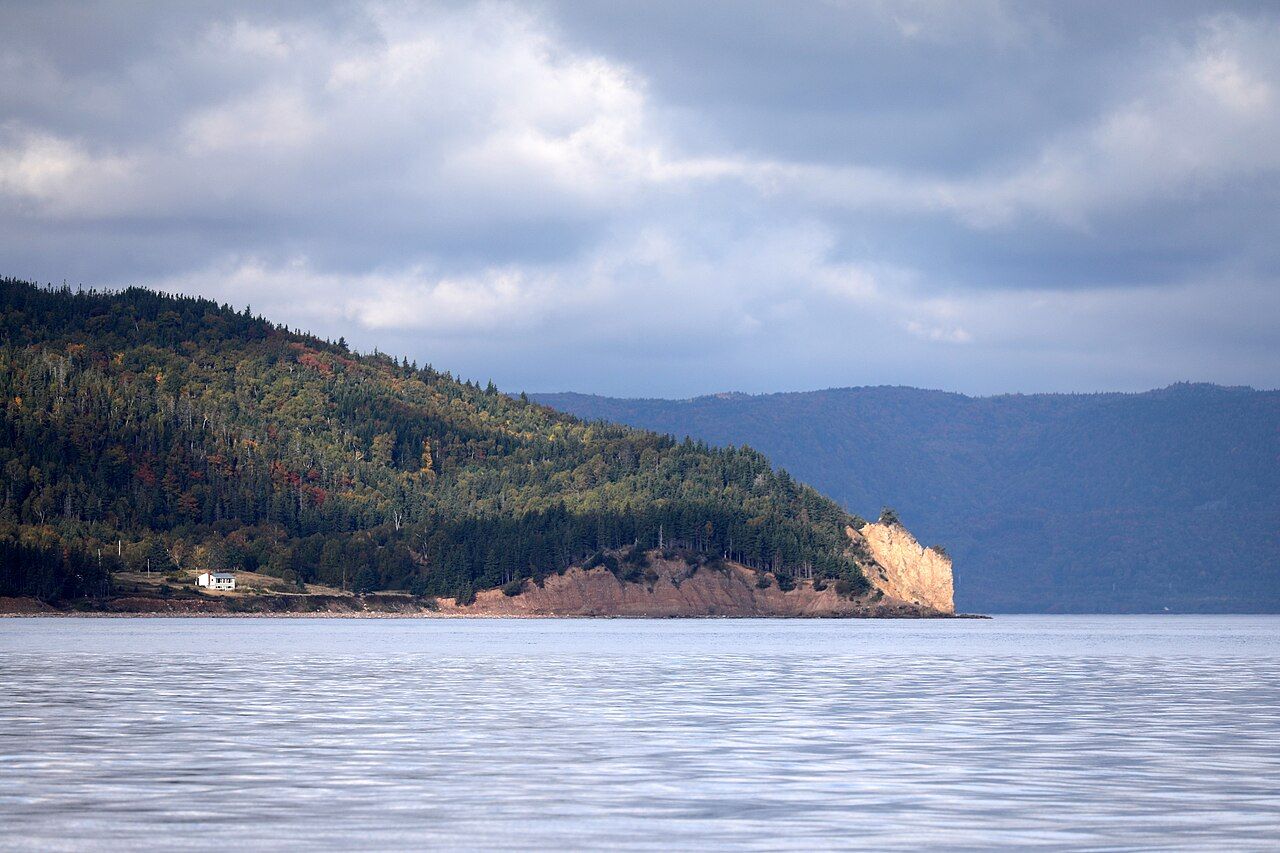 Photo by Ken Heaton; CC BY-SA 4.0 (source file)
Back along the coast: Cape Breton · Further on: Louisbourg · Same stretch: Chéticamp, Cape Breton · the whole coast · logbook