Acadian, Gaelic and Mi'kmaw
Gaelic Cape Breton and the fiddle
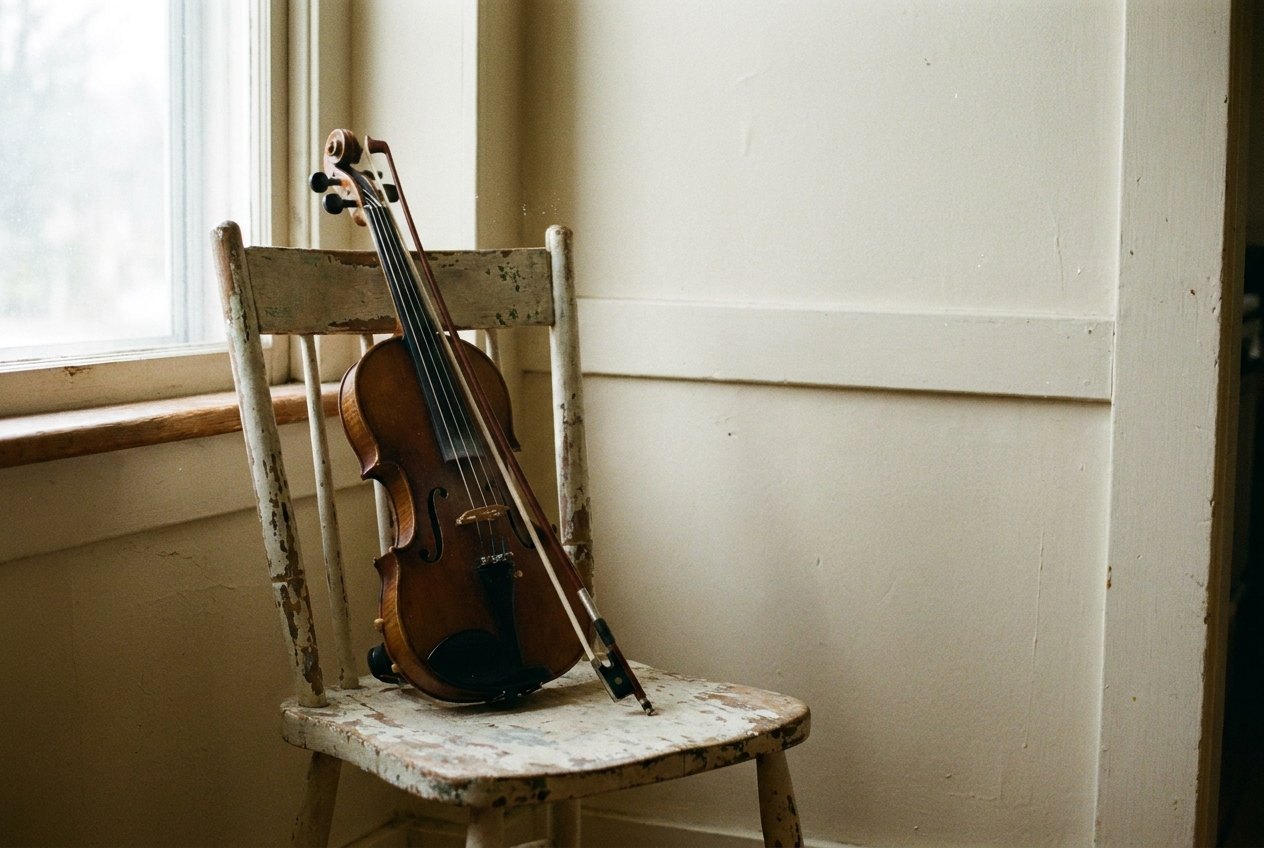
Scottish Highlanders brought their language and music to the island two centuries ago. The language bent but did not break, and the fiddle never stopped playing.
- Getting there
- Ceilidh coast, Bras d'Or and Cabot Trail
- Bring
- Dancing shoes, a cardigan for cool halls
- At sea
- Summer evenings are mild on the west coast, but October festival nights can be cold and wet, with strong winds off the gulf.
- From Chéticamp
- Mabou is about an hour south
Cape Breton has more than one culture, and the Scottish one is the loudest. You hear it in the fiddle at a square dance, see it in bilingual road signs, and feel it in the place names: Inverness, Mabou, Iona, Glendale, Skye Glen. For a long stretch of the nineteenth century, Scottish Gaelic was one of the main languages spoken across much of the island, and its music and customs still shape community life today.
How the Highlanders came
Scottish settlement in Nova Scotia began in earnest in the late eighteenth century and grew sharply in the early nineteenth. Many emigrants came from the Highlands and the Western Isles, pushed by poverty, rising rents and the Highland Clearances, when landlords removed tenants to make way for sheep farming. They crossed the Atlantic in crowded ships and took up land along the coasts and around the Bras d'Or.
They brought their language, their Presbyterian and Catholic churches, their songs and their fiddle music. In many districts of Cape Breton, whole communities spoke Gaelic at home, at church and at work. The island became one of the largest Gaelic-speaking areas outside Scotland.
A language that nearly slipped away
Through the twentieth century, Gaelic declined. Schools taught in English, children were often discouraged or punished for speaking Gaelic, and young people left the island for work in industrial towns and cities. Speaking English came to be seen as the way forward. By the later decades of the century, fluent native speakers were mostly older people, and the language seemed close to disappearing.
It did not. Gaelic classes, immersion programmes, community groups and radio and online projects have worked to bring it back, and a new generation of learners has grown up alongside the remaining native speakers. Nova Scotia now has an office dedicated to Gaelic affairs, and Gaelic appears on some road signs. The number of fluent speakers is still small, so treat it with interest and respect rather than as a curiosity. A simple ciamar a tha thu, how are you, is a friendly start.
The Cape Breton fiddle
The island's best-known Scottish legacy is its fiddle music. Cape Breton fiddling has a strong, driving rhythm made for dancing, heavy use of ornaments and cuts, and a repertoire of strathspeys, reels and jigs, many of them older than the settlement itself. It is usually accompanied by piano, played with a strong rhythmic left hand, and sometimes guitar.
The music goes hand in hand with step dancing, a close-to-the-floor style in which dancers keep their upper bodies still and beat out the rhythm with their feet. At a square dance, sets of couples dance figures to the fiddle for hours. Community halls in places like Mabou, Glencoe and West Mabou have held summer square dances for generations, and visitors are usually welcome to watch or join in.
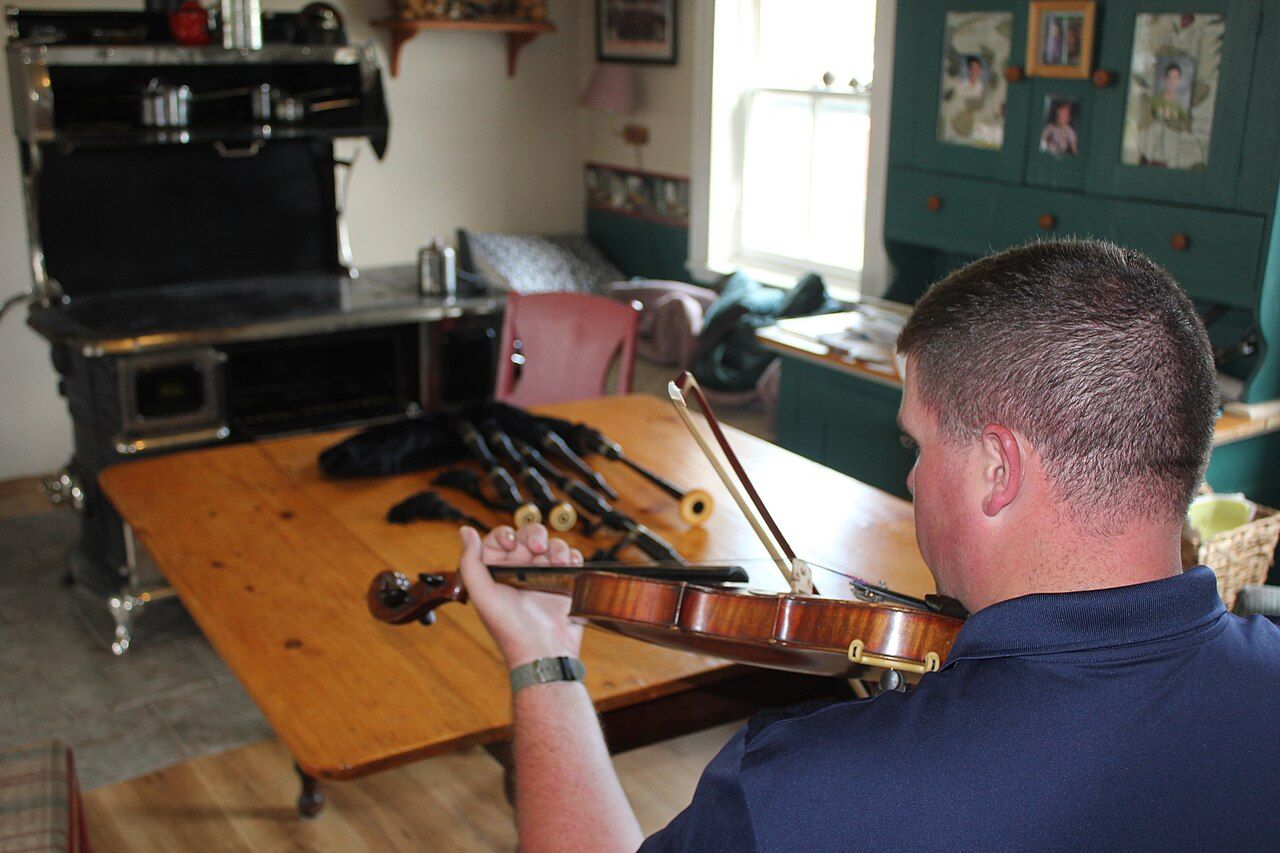 Photo by Iainmacharg; CC BY-SA 4.0 (source file)
The fiddle tradition is woven through Acadian music too, and the two cultures share tunes and players. The Acadian life on the west coast has its own music worth hearing.
Further along the coast: Crossing the causeway and the Ceilidh coast
Ceilidhs and Celtic Colours
A ceilidh, pronounced kay-lee, is a gathering for music, song, dance and talk. On Cape Breton the word covers everything from a formal concert in a parish hall to a few musicians around a kitchen table. In summer, churches, halls and community centres along the west coast, the stretch often called the Ceilidh Trail, hold regular ceilidhs and dances, often weekly.
In October the island hosts Celtic Colours, a festival of Celtic music and culture spread across dozens of venues around Cape Breton, timed for the autumn leaves. It brings together island musicians and performers from Scotland, Ireland and elsewhere, with concerts in community halls and churches, workshops, suppers and late-night sessions. Popular events sell out, and accommodation around the island is heavily booked during the festival, so plan well ahead and check the festival's own programme for dates.
The Highland Village and the Gaelic College
For the history in one place, the Highland Village Museum at Iona, overlooking the Bras d'Or, is a living-history site run by the province. Historic buildings, from a reconstruction of a Hebridean black house to later farmhouses, a school and a store, are set across a hillside, and costumed interpreters show how Gaelic settlers lived, often speaking Gaelic as they work. It gives a clear sense of how far the settlers came and how they adapted.
At St. Ann's, on the Cabot Trail near the start of the eastern loop, the Gaelic College has taught Gaelic language, music and dance since the late 1930s. It offers courses, summer sessions and exhibits, and it is a centre for the culture's revival. Opening hours and programmes vary by season.
Where to hear it
The densest concentration of Scottish music is along the west coast from Port Hastings to Margaree, in communities such as Judique, Port Hood, Mabou and Inverness. Judique has a centre dedicated to Celtic music, and Mabou is often treated as the heart of the fiddle tradition. Inland, the Margaree valley and the lake country around the Bras d'Or have their own musicians and halls.
Plan an evening around a dance or ceilidh rather than hoping to stumble on one. The Ceilidh coast is the obvious place to start, the Margaree valley lies just north, and a trip to Iona fits well with a drive around the Bras d'Or.
Back along the coast: Chéticamp · Further on: Unama'ki · Same stretch: Chéticamp, Unama'ki · the whole coast · logbook